Mouth-Watering Steak Marinade for Tender, Delicious Steaks
You deserve a meal that tastes like it came from a professional American grill. Using the best steak marinade makes your favorite protein tender. This simple step ensures every bite is juicy and remarkably flavorful.
A good marinade needs acidity from ingredients like balsamic vinegar. These ingredients break down tough proteins. Quality oils keep the surface moist during cooking. Adding fresh garlic and vibrant herbs makes the crust smell incredible.
This guide shows how to use a steak marinade to improve your home cooking. You’ll learn about timing and the right ratios for consistent results. Get ready to wow your guests at your next backyard barbecue.
Table of Contents
Key Takeaways
- Acidity effectively tenderizes muscle fibers for a better mouthfeel.
- High-quality oils distribute fat-soluble flavors throughout the meat.
- Proper timing prevents the protein from becoming mushy or tough.
- Fresh aromatics like garlic create a professional and bold profile.
- Salt acts as a vehicle to carry seasoning deep into the center.
- Balancing sweet and savory notes creates a more complex taste.
Why Marinating Your Steak Makes All the Difference
A good steak marinade can turn a simple meal into a memorable one. Marinating your steak is more than just a step before cooking. It’s a key process that boosts both flavor and tenderness. By letting the steak soak in a mix of special ingredients, you can greatly enhance its quality.Enhancing Flavor and Tenderness
Marinating adds depth and complexity to the steak’s natural taste. A good marinade combines ingredients that taste great and tenderize the meat. For example, acids like vinegar or citrus juice break down proteins, making the steak tender. Oils and spices add rich, savory flavors.
Here are some key benefits of marinating your steak:
- Increased tenderness due to the breakdown of proteins
- Enhanced flavor from the infusion of herbs, spices, and other ingredients
- Improved texture, making the steak more enjoyable to eat
Marinating your steak does more than just add flavor. It makes the meat more enjoyable to eat. The process lets the ingredients soak into the meat, making every bite flavorful. Whether you use aneasy steak marinade or a complexflavorful steak marinade, you’ll enjoy a better meal.
Understanding the importance of marinating can elevate your steak cooking. It’s a simple step that greatly improves taste and texture.
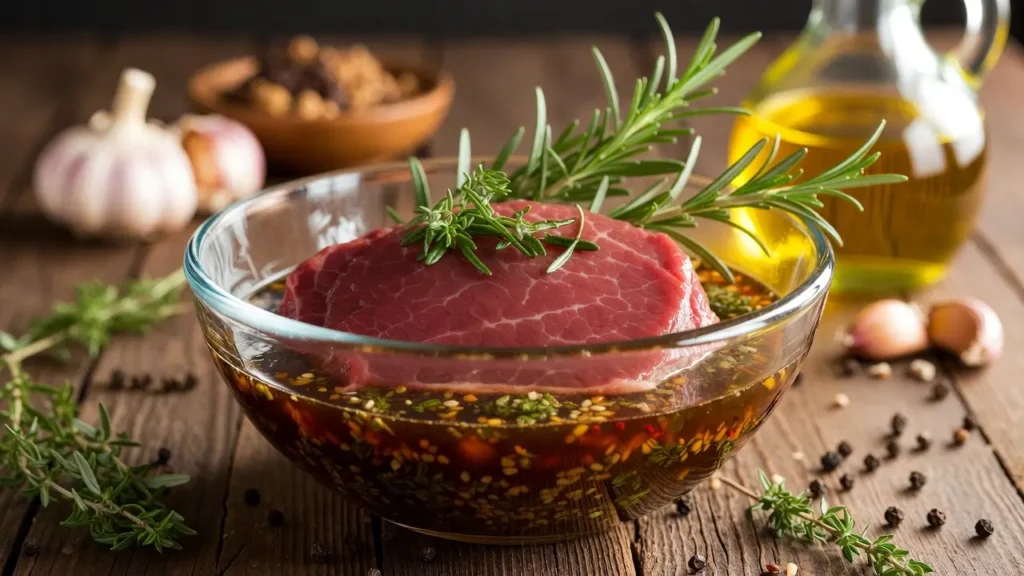
The Science Behind a Perfect Steak Marinade
To make a great steak marinade, you need to know the science. It’s not just a mix of ingredients. It’s a blend of acids, oils, seasonings, and aromatics that tenderize and flavor your steak.
How Acids Tenderize Meat
Acids are key in tenderizing meat. They break down proteins on the steak’s surface. This makes the steak tender and ready to soak up flavors.
Common acids in marinades are vinegar, citrus juice, and wine. They denature proteins, making the meat more tender and tasty.
Table: Effects of Different Acids on Steak
| Acid Type | Tenderizing Effect | Flavor Profile |
| Vinegar (e.g., balsamic, apple cider) | High | Fruity, tangy |
| Citrus Juice (e.g., lemon, lime) | Moderate | Bright, citrusy |
| Wine (red or white) | Moderate to High | Fruity, slightly acidic |
The Role of Oils in Flavor Distribution
Oils are crucial in a marinade. They spread flavors evenly across the meat. Olive oil, avocado oil, and grapeseed oil are good choices because of their flavors and high smoke points.
Why Seasonings and Aromatics Matter
Seasonings and aromatics add depth to your marinade. Ingredients like garlic, onions, herbs, and spices enhance the steak’s flavor. They also make the steak smell great.
Understanding acids, oils, seasonings, and aromatics helps you make a marinade. It tenderizes the steak and adds rich flavors. Knowing how to make steak marinade lets you get delicious results every time.
Essential Ingredients for the Best Steak Marinade
Making the best steak marinade starts with knowing its key ingredients. A good marinade can make your steak taste better and feel softer. It turns a simple meal into a special experience.
Acid Components: Choosing Your Base
Acidic ingredients are key in a steak marinade. They break down the meat’s proteins, making it tender and flavorful. Common acids include:
- Red wine vinegar: Adds a rich, fruity flavor.
- Lemon juice: Provides a bright, citrusy taste.
- Balsamic vinegar: Offers a sweet and tangy flavor profile.
Think about the flavor you want when picking an acid.
Oil Selection for Maximum Flavor
Oils are important for spreading flavors in the steak. They also keep the meat moist. Popular oils for marinades are:
| Oil Type | Flavor Profile |
| Olive oil | Fruity and peppery |
| Avocado oil | Mild and buttery |
| Grapeseed oil | Light and neutral |
Herbs, Spices, and Aromatics That Shine
Herbs, spices, and aromatics add depth to your marinade. Some favorites are:
- Garlic: Adds a pungent flavor.
- Thyme: Provides a savory, slightly minty taste.
- Rosemary: Offers a piney, herbaceous flavor.
Sweeteners and Umami Boosters
Sweeteners and umami boosters can make your marinade taste better. Try adding:
- Brown sugar: Adds a rich, caramel-like sweetness.
- Soy sauce: Provides a savory, umami flavor.
- Mushroom extract: Enhances the umami taste.
By mixing these ingredients, you can make a marinade that makes your steak tender and tasty.
The Ultimate Steak Marinade Recipe
Discover the secret to tender and flavorful steaks with our ultimate marinade recipe. This marinade tenderizes your steak and adds a rich flavor. It’s perfect for both seasoned grill masters and beginners, making sure your steaks are always the highlight.
Complete Ingredient List with Measurements
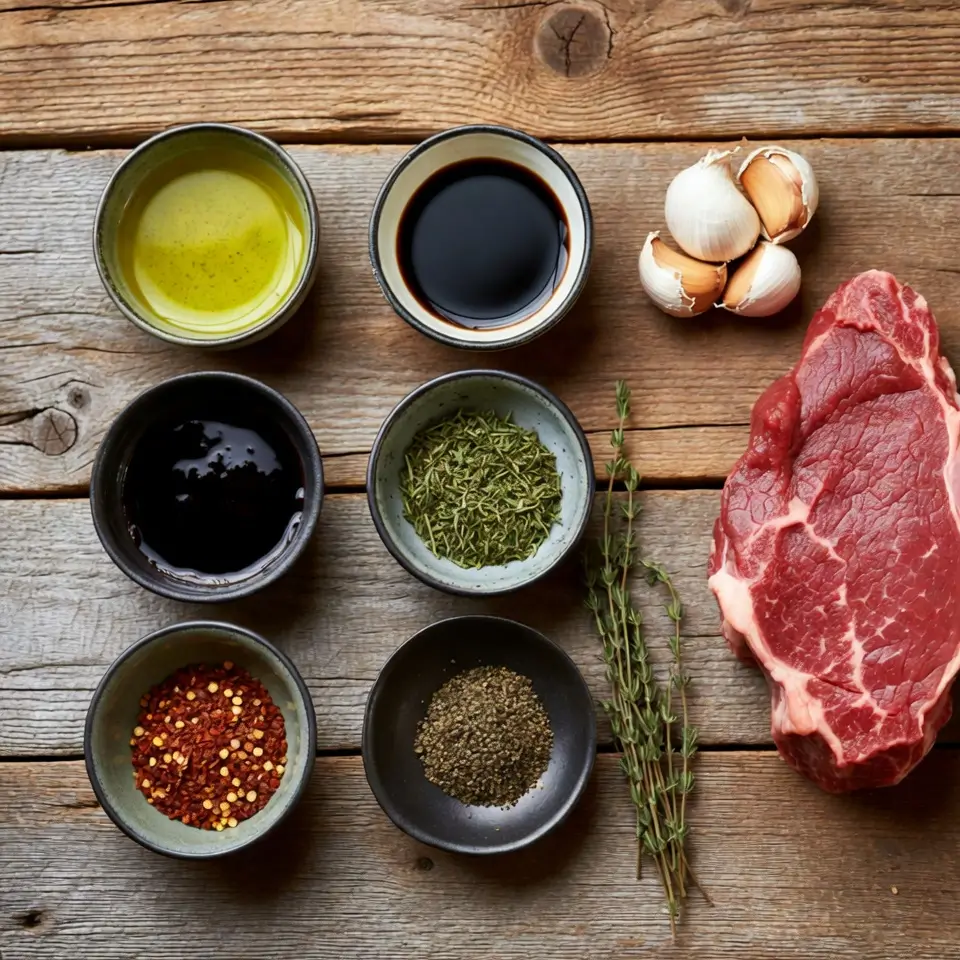
To make our ultimate steak marinade, you’ll need the following ingredients:
- 1/2 cup of olive oil – a healthy and flavorful base
- 1/4 cup of soy sauce – for that umami flavor
- 1/4 cup of red wine vinegar – adds a tangy twist
- 2 cloves of garlic, minced – because everything’s better with garlic
- 1 tablespoon of Worcestershire sauce – for depth
- 1 teaspoon of dried thyme – a classic herb that pairs well with steak
- 1/2 teaspoon of black pepper – freshly ground, of course
- 1/4 teaspoon of red pepper flakes – optional, for some heat
Step-by-Step Mixing Instructions
Mixing the marinade is easy. In a bowl, mix olive oil, soy sauce, red wine vinegar, garlic, Worcestershire sauce, thyme, black pepper, and red pepper flakes (if using). Whisk until well combined. You can also blend for a smoother marinade, but it’s not required.
After mixing, taste the marinade. Add salt or vinegar if needed. Then, pour it into a container big enough for your steak and marinade.
Pro Tips for Perfect Consistency
Getting the marinade just right is crucial. It should cover your steak evenly without being too runny or thick. If it’s too thick, add vinegar or oil. If too thin, add more oil or reduce vinegar.
Remember, the marinade should enhance your steak, not overwhelm it. Adjust the ingredients to suit your taste and steak type.
How to Properly Marinate Your Steak
To get the most out of your steak, learning how to marinate it right is crucial. A good marinade can make the steak taste better and be more tender. But, how you do it is just as important as what you use.
Preparing Your Steak for Marinating
First, make sure your steak is at room temperature. This lets the marinade soak in better. Pat the steak dry with paper towels to get rid of extra moisture. This helps the marinade stick to the steak better.
Choosing the Right Container
The container you pick for marinating matters. Use a non-reactive container like glass or ceramic. Metals like copper or cast iron can change the taste of your steak because they react with acidic marinade ingredients.
Techniques for Even Coverage
To coat your steak evenly, put it in the marinade and massage the marinade into the meat. Make sure every part of the steak is covered. If using a zip-top bag, seal it tightly to remove air. This stops bacteria from growing and helps the marinade spread evenly.
Turning the steak now and then helps the flavors spread out. For thicker steaks, you might need to adjust how long you marinate and how you do it. This ensures the marinade gets deep into the meat.
Marinating Time Guidelines for Different Steak Cuts
Getting the perfect marinated steak starts with knowing the right marinating time for your cut. Each steak type has its own needs for tenderness and flavor. This means different marinating times are needed.
Timing for Thin Cuts Under One Inch
Steaks like flank or skirt, which are thin, need less time in the marinade. For steaks under one inch, marinating for 2 to 4 hours is enough. But, if your marinade is very acidic, limit it to 2 hours to avoid mushiness.
Timing for Thick Cuts Over One Inch
Thicker steaks, like ribeye or strip loin, need more time. For steaks over one inch, marinating can take from 4 to 24 hours. This longer time lets the flavors soak deeper, making the steak taste better with a well-balanced best steak marinade.
Warning Signs of Over-Marinating
Marinating is great for flavor and tenderness, but too much can be bad. Signs of over-marinating include a mushy texture and a loss of natural flavor. Acidic marinades can break down the meat too much if marinated too long.
As culinary expert,
Chef Jacques Pépin once said, “The art of marinating is not just about adding flavor, but also about understanding the balance between the meat and the marinade.”
Chef Jacques Pépin
| Steak Thickness | Recommended Marinating Time |
| Under 1 inch | 2-4 hours |
| 1-1.5 inches | 4-12 hours |
| Over 1.5 inches | 12-24 hours |
Choosing the best steak marinade is important. Paying attention to marinating time is key to a tender and tasty steak.
Best Steak Cuts for Marinating
Marinating can make different steak cuts better, but some benefit more. The right cut is key to tender, flavorful steaks with an easy steak marinade.
Budget-Friendly Cuts That Benefit Most from Marinades
On a budget? Certain steak cuts can be made better with marinating. Flank steak, skirt steak, and top sirloin are affordable and get tender and tasty when marinated.
Here’s a comparison of these budget-friendly cuts:
| Steak Cut | Tenderness Level | Marinating Time |
| Flank Steak | Moderate | 2-4 hours |
| Skirt Steak | Moderate | 2-4 hours |
| Top Sirloin | Tender | 1-2 hours |
Premium Cuts and Marinade Considerations
Premium cuts like ribeye and filet mignon also benefit from marinating. They need less time because they’re naturally tender. The goal is to boost their flavor without hiding their taste.
For premium cuts, a simple marinade works best. An easy steak marinade with herbs and mild spices is a great choice.
Common Steak Marinating Mistakes to Avoid
Avoiding common mistakes is key to a perfect steak marinade. A few wrong steps can ruin the flavor and texture. Knowing what not to do is as crucial as knowing the right marinade recipe.
Over-Marinating and Mushy Texture
Over-marinating can make your steak mushy. Acids in the marinade break down proteins. But too much can ruin the texture. The right time depends on the steak’s thickness and type.
Using Reactive Metal Containers
Reactive metal containers can ruin your steak’s flavor. Aluminum and copper react with acidic ingredients in the marinade. This can lead to bad flavors and contamination. Stick to glass, ceramic, or stainless steel containers.
Temperature and Cross-Contamination Errors
Keeping the right temperature is essential. Marinate in the fridge, not at room temperature, to avoid bacteria. Also, keep the steak away from other foods and use clean utensils and hands.
Adding Salt Too Early
Adding salt too soon can make the steak tough. Salt can be added towards the end of marinating or just before cooking. This way, it enhances flavor without making the steak tough.
Delicious Marinade Variations to Try
Discover the world of steak marinades with our international flavors. You can take your steak to the next level by trying different marinades. This section will show you four unique marinades that will excite your taste buds.
Asian-Inspired Soy Ginger Marinade
Take a trip to Asia with a marinade of soy sauce and ginger. You’ll need:
- 1/2 cup soy sauce
- 1/4 cup olive oil
- 2 cloves garlic, minced
- 2 inches ginger, grated
- 2 tablespoons honey
Mix these ingredients and marinate your steak for at least 2 hours. Soy sauce gives a deep umami taste, and ginger adds spice.

Southwestern Chipotle Lime Marinade
Give your steak a smoky twist with this Southwestern marinade. Chipotle peppers and lime juice make it bold and tangy. To make it, combine:
- 1/2 cup lime juice
- 1/4 cup olive oil
- 2 chipotle peppers in adobo sauce, minced
- 2 cloves garlic, minced
- 1 teaspoon cumin
This marinade is great for those who like a bit of heat. Chipotle peppers bring smokiness, and lime juice adds acidity.
Mediterranean Herb and Garlic Marinade
Try a Mediterranean marinade for a classic taste. It’s made with:
- 1/4 cup olive oil
- 1/4 cup lemon juice
- 4 cloves garlic, minced
- 2 tablespoons chopped fresh oregano
- 2 tablespoons chopped fresh thyme
Herbs and garlic in this marinade enhance the steak’s natural flavors, making it aromatic and delicious.
Sweet Bourbon Brown Sugar Marinade
For a sweeter marinade, mix bourbon, brown sugar, and spices. To make it, combine:
- 1/4 cup bourbon
- 1/4 cup brown sugar
- 2 tablespoons Dijon mustard
- 1 teaspoon smoked paprika
- 1/4 cup olive oil
This marinade is perfect for those who like sweet and savory flavors. Bourbon adds depth, and brown sugar gives a caramelized crust.
Steak marinades offer endless flavors to explore. Feel free to mix ingredients and flavors to find your favorite flavorful steak marinade. Whether you prefer spicy, savory, or sweet, there’s a marinade for you.
Food Safety and Storage Tips for Steak Marinades
Keeping your steak marinade safe and flavorful is key. When making a tasty steak marinade, don’t forget about storage and handling. Not doing so can cause contamination and illness.
Proper Refrigeration and Temperature Guidelines
For a safe marinade, store it in the fridge at 40°F (4°C) or lower. Use a covered container to avoid cross-contamination. Make sure the steak is fully covered in the marinade and kept at a steady fridge temperature.
Can You Reuse Marinade Safely
Many wonder if they can reuse marinade. The answer is no for marinades that touch raw meat, poultry, or seafood. To use marinade as a sauce, set aside some before adding it to raw meat. If reusing, boil the marinade for 5 minutes to kill bacteria.
Shelf Life of Homemade Marinades
The life of a homemade steak marinade varies by ingredients. It can last days to a week in the fridge. Acidic ingredients like vinegar or citrus juice help keep it fresh. But always check for spoilage signs like bad smells or mold. If unsure, make a new batch.
Cooking Your Marinated Steak to Perfection
Now that your steak is marinated, it’s time to cook it. Cooking it right ensures it stays flavorful and tender. Follow a few key steps to achieve this.
Removing Excess Marinade Before Cooking
First, remove any extra marinade from the steak. This is important to avoid uneven cooking and flare-ups when grilling. Just gently pat the steak dry with paper towels. This step helps create a better crust, improving both texture and taste.
Best Cooking Methods for Marinated Steaks
The cooking method you pick greatly affects the steak’s outcome. Here are some top methods:
- Grilling: Grilling adds a smoky flavor that goes well with many marinades. Make sure your grill is hot for a good sear.
- Pan-searing: This method creates a nice crust on the steak. Use a hot skillet with a bit of oil to prevent sticking.
- Oven broiling: Oven broiling cooks the steak evenly. It’s great for a consistent result.
Internal Temperature Guide for Doneness Levels
Getting the perfect doneness means hitting the right internal temperature. Here’s a guide:
| Doneness Level | Internal Temperature (°F) |
| Rare | 120°F – 130°F |
| Medium Rare | 130°F – 135°F |
| Medium | 140°F – 145°F |
| Medium Well | 150°F – 155°F |
| Well Done | 160°F and above |
Using a meat thermometer is the best way to check doneness. Remember, the steak will cook a bit more after it’s removed from heat. So, it’s okay to take it off a degree or two before reaching your desired temperature.
Serving Suggestions and Pairing Ideas
Now that you’ve mastered the art of marinating your steak, it’s time to explore the perfect accompaniments. A well-marinated steak is just the beginning. The right sides and beverages can transform it into a truly memorable meal.
Classic Side Dishes
Classic side dishes can make or break the overall flavor profile of your steak dinner. For a flavorful steak marinade, consider pairing it with:
- Garlic mashed potatoes
- Grilled asparagus with lemon
- Roasted vegetables like Brussels sprouts or bell peppers
These sides complement the rich flavors of the steak without overpowering it.
Finishing Sauces and Compound Butters
Adding a finishing sauce or compound butter can enhance the flavors of your best steak marinade. Some popular options include:
- A Béarnaise sauce for a rich, creamy complement
- A compound butter infused with herbs like parsley or thyme
- A peppercorn sauce for a bold, spicy kick
These additions can elevate your steak to the next level.
Wine and Beverage Pairings
The right beverage can significantly enhance your steak-eating experience. For a marinated steak, consider pairing it with:
- A full-bodied red wine like Cabernet Sauvignon or Syrah
- A craft beer with malty, caramel notes
- A classic cocktail like an Old Fashioned
These pairings can complement the complex flavors of your steak.
Conclusion
Now you know how to make a delicious steak marinade. This can make even the toughest steak tender and tasty. It’s time to try it out.
Learning about marinades and trying new ingredients can lead to amazing flavors. You can impress everyone with your steak. Whether it’s a classic mix or something new, finding the right flavors is key.
Keep trying new things with steak marinades. Always follow food safety and cooking tips for the best steak. With practice, you’ll get better at making great steak marinades. Your taste buds will love it.
FAQ
What is the best steak marinade for achieving maximum tenderness?
For tender steak, mix fat, acid, and salt. Balsamic vinegar or lemon juice softens the meat. Use Bertolli Extra Virgin Olive Oil to keep it juicy. Worcestershire sauce adds a deep flavor.
How long should I let my steak sit in a flavorful steak marinade?
Marinating time varies by cut. Thin cuts like flank steak need 2 to 4 hours. Thicker cuts like sirloin can marinate up to 24 hours. But, don’t marinate over 24 hours to avoid a mushy texture.
Is there an easy steak marinade recipe for a quick weeknight dinner?
Yes! Mix 1/2 cup Kikkoman Soy Sauce, 1/3 cup olive oil, 3 tablespoons lemon juice, and 3 cloves garlic. This blend is perfect for any beef cut.
How to make steak marinade that doesn’t cause flare-ups on the grill?
Use oils like avocado or refined grapeseed oil to prevent flare-ups. Pat the steak dry before grilling. This helps get a better sear and avoids oil igniting the flames.
Can I reuse the liquid from my steak marinade recipe as a dipping sauce?
Never use raw meat marinade as a sauce without boiling it for five minutes. It’s safer to keep a portion of the marinade separate before adding the steak.
Why should I avoid using aluminum containers for marinating?
Acids in marinades can react with aluminum, giving your steak a metallic taste. Use Pyrex glass or heavy-duty Ziploc bags instead for pure flavor.
What are the best steak cuts to use with a marinade?
Budget-friendly cuts like Flank, Skirt, Hanger, and Chuck Eye benefit most from marinades. Premium cuts like Filet Mignon or New York Strip need only a light marinade for flavor.
Should I add salt directly to my steak marinade recipe?
Salt is key for flavor, but add it sparingly for long marinating times. Use umami-rich liquids like Worcestershire sauce instead. Season with Maldon Sea Salt after cooking.